
AI Solutions · Digital Products & Autonomous Systems

Software Architecture & Autonomous Multi-Agent Systems

“You can never solve a problem with the same thinking that created it.”

– Albert Einstein

I combine over 15 years of enterprise industry experience with modern AI agents to build digital products that work reliably in everyday life—from recipe platforms to autonomous robots.

bernd@zuther:~/agents ?
> ▌
claude-fable-5.2 · 0K/1M · [░░░░░░░░░░] 0% · ◎ 99.6% · ◷ 0.0s · ↑ 0 t/s
AI Solutions

Three projects of my own, built with agents

Under AI Solutions I build products of my own that are largely run by agents. What interests me is how far I can get with that on my own. Two of them are in production, each with its own face, but following the same process. The third is still on my workbench:

  1. 1Kick-off
  2. 2Agents at work
  3. 3Human oversight

Ketovavaria

Recipe portal

Pescatarian keto recipes for the whole table

Clay-figure illustration: In the evening, a woman sits at the kitchen table searching for a recipe on her tablet, while the zucchini mascot in a chef's hat peeks out of a vegetable bowl next to her.
1. Kick-off

A real everyday problem: a ketogenic, meat-free diet that also keeps an eye on kidney values (potassium, phosphorus, sodium), so the whole family can eat at the same table.

Clay-figure illustration: Three zucchini chefs work as a team: one reads a cookbook, one writes, one prepares salmon and vegetables.
2. Agents at work

Specialized AI assistants draft recipes, calculate nutritional values from official databases and create the illustrations.
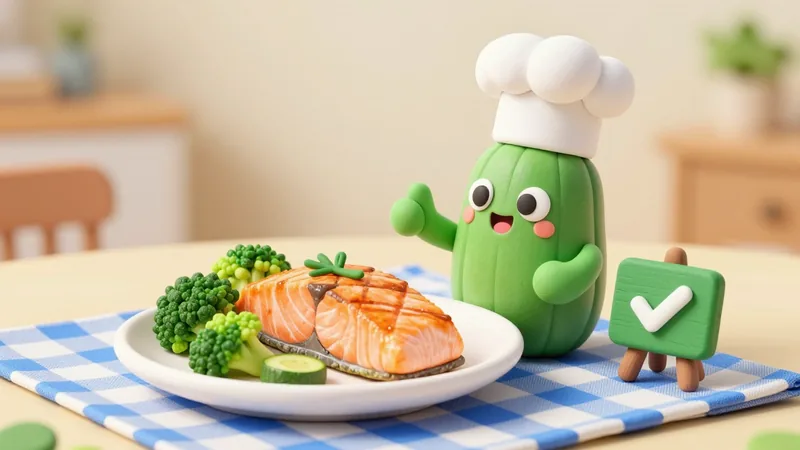
Clay-figure illustration: The zucchini mascot presents a plate of salmon and broccoli, next to a green sign with a check mark.
3. Human oversight

An automated quality check verifies every value; nothing is published until I have reviewed it personally. More than 120 recipes are already online this way.

Under the Hood
  • Multi-Agent-Pipeline
  • USDA FoodData
  • Automated Quality Gates
  • Human-in-the-Loop

bernd-zuther.de

Tech blog

Hands-on reports on AI agents, written with agents

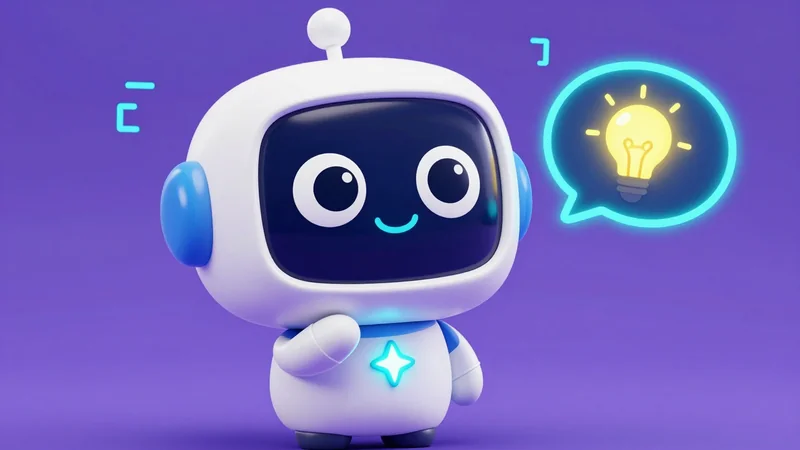
Cartoon illustration: the friendly white bernd-zuther.de robot with a dark screen face thinks about a new idea, next to it a glowing speech bubble with a light bulb.
1. Kick-off

An observation from practice: an architecture pattern, a server problem I solved, or a lesson learned from running AI systems.

Cartoon illustration: two robots in a review. Sonnet with blue ears holds up the draft on a tablet, Opus with pink ears inspects it critically with a magnifying glass.
2. Agents at work

An editorial agent researches and structures the post, translates it in parallel and prepares it for publishing.

Cartoon illustration: the robot gives a cheerful thumbs up, behind it a monitor with the finished web page and a green check mark.
3. Human oversight

A second AI system critically reviews the draft; nothing goes live without my final sign-off.

Under the Hood
  • Hermes Harness
  • Dual-LLM-Review
  • Bilingual DE/EN
  • Git-based Publishing

PiCrawler

Robotics Coming Soon

A four-legged walking robot that is meant to learn to find its own way around a room

3D illustration: A small white robot with four legs, a dark screen face and big cartoon eyes stands next to a large cardboard box and looks ahead curiously.
1. Kick-off

A four-legged walking robot that should find its way around a room and react to obstacles on its own—without constant remote control.

3D illustration: The small four-legged robot walks past the cardboard box; a dashed line on the floor shows its path around the obstacle.
2. Agents & training

Camera and distance sensors read the surroundings in real time; the motion control was trained thousands of times beforehand in a virtual simulation.

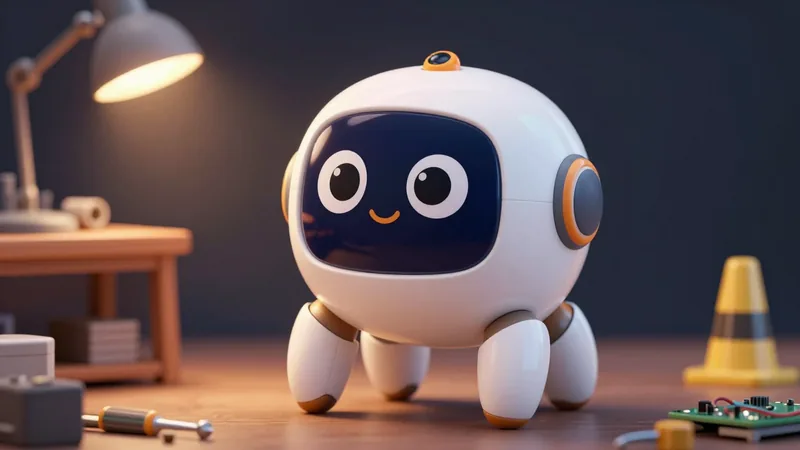
3D illustration: The small four-legged robot stands in a workshop under a desk lamp, with screwdrivers and a circuit board in front of it and a yellow-and-black warning cone beside it.
3. Human oversight

Whatever works in the simulator is tested and hardened step by step on the real hardware.

Under the Hood
  • Raspberry Pi
  • Google Coral TPU
  • PyBullet RL
  • MQTT
  • int8 Quantization
View the code on GitHub ↗ Repository, not a live product
AI Solutions

What AI Solutions stands for

01

Reliability over AI hype

AI brings speed and first drafts—but only clear review processes and human accountability (Human in the Loop) turn them into reliable systems.

02

Own products as proof

No theory on slides: every method runs on my own live platforms (ketovavaria.de) under real-world conditions and keeps evolving there.

03

Industry experience meets agility

Over 15 years of experience with complex enterprise architectures (including the automotive industry), combined with the delivery speed of modern agent teams.

Explore by topic

Technology Radar

An honest look into my toolbox: which technologies are ready for reliable everyday use (production) today—and what am I still testing in the lab? Technologies I actually use across the full lifecycle — from Ideate to Design, Build and Operate. Ring position shows maturity in my own practice, not hype.

Technology radar across Ideate, Design, Build, Operate IDEATE DESIGN BUILD OPERATE Multi-Agent Systems · In everyday production use — Several specialized AI assistants share one task—like a small team with clear roles. Agile Methods (Scrum, Lean Canvas, Design Thinking) · In everyday production use — Working in short iterations with fast feedback, so the right thing gets built in the end. Software Architecture: arc42, iSAQB and Domain-Driven Design · In everyday production use — The blueprint of a software system, so it stays understandable, maintainable and extensible for years. Java / Spring · In everyday production use — A proven programming language and toolkit for stable business applications. Self-Hosted AI Infrastructure (ComfyUI, local LLMs) · In field testing — AI models run on my own hardware instead of someone else's cloud—more control over data and costs. Terraform & Legacy Tech · On hold — Older tools for server setups that I deliberately no longer use for new projects. Cloud & Infrastructure: AWS-first · In everyday production use — Computing power and services are rented on demand instead of run in-house. CI/CD & Canary Releases · In everyday production use — New versions ship automatically and go live for only a few users first—so a bug never hits everyone. Monitoring & Observability · In everyday production use — Continuous monitoring, so errors are spotted right away. Agent Communication & Observability · In the lab — Tracing what AI assistants discuss and decide among themselves—so nothing happens out of sight.
Maturity in plain English (center = most used)
  • In everyday production use (proven, stable, documented) · Adopt
  • In field testing (already running in my own projects) · Trial
  • In the lab (being watched and evaluated) · Assess
  • On hold (deliberately not used for new projects) · Hold
Lifecycle phase
  • Ideate
  • Design
  • Build
  • Operate

In short – hover over a dot in the radar or read here:

New & recent

All articles →
★ Recommended Starting Point Overview & Strategy

The Stages of AI Use: From the Single Request to a Reviewed Agent Pipeline

"Are you using AI yet?" is the wrong question for me. Almost everyone uses some form of AI today, often without consciously noticing it. What gets interesting is…

16. November 2026
Overview & Strategy

The Stages of AI Use in Detail, Part 2: How the Agent Meets Real Tools

23. November 2026
Illustration: ein Roboter-Maskottchen prüft mit einer Lupe zwei Diagramme mit unterschiedlich hohen Balken, Sinnbild für zwei Zählungen, die nicht übereinstimmen
Overview & Strategy

What a Week of Agent Operations Really Delivers: Ketovavaria, KW46

20. November 2026
Overview & Strategy

The Stages of AI Use in Detail, Part 1: From the Single Request to the Fixed Assistant

18. November 2026
Bernd Zuther Photo: Anna Mardo

About me

For over 15 years I have been developing and architecting software systems – from early Java projects through microservices at Audi and codecentric to data engineering platforms at MAN. I'm currently deeply focused on autonomous multi-agent systems.

More about me →